
This article is general information, not tax, legal or accounting advice. Rules differ by country and change over time — confirm the details for your situation with a tax professional.
If you are self-employed or run a small business, receipts are more than proof of purchase. They are the evidence behind every deduction you claim. Lose them and a legitimate expense can become impossible to support. Here is how to keep them in a way that makes tax time boring — in a good way.
What a good record contains
A number alone doesn't prove much. A useful record answers four questions:
- How much? The amount paid, including tax.
- When? The date of the purchase.
- Where? The merchant or supplier.
- Why? The business purpose — who it was for, what it was, why it was needed.
The first three are on the receipt. The fourth usually isn't, and it is the one people forget. "Lunch, €48" is weak; "Lunch with a client to discuss the Q3 contract" is a record. In Expio you can mark each expense as personal, business or mixed (with a business share in percent) and add a business purpose in a few words, right when you scan it.
US example: what the IRS asks for
For US sole proprietors filing Schedule C, a few rules come up again and again:
- Keep supporting documents. IRS Publication 463 asks for documentary evidence, such as receipts, for all lodging expenses and for any other travel, gift or transportation expense of $75 or more — plus a record of the amount, time, place and business purpose.
- Meals and entertainment are different. Business meals are generally only 50% deductible, and entertainment has generally not been deductible since 2018.
- Digital copies are fine. The IRS accepts electronic records, such as scanned receipts, as long as they are accurate, complete and legible.
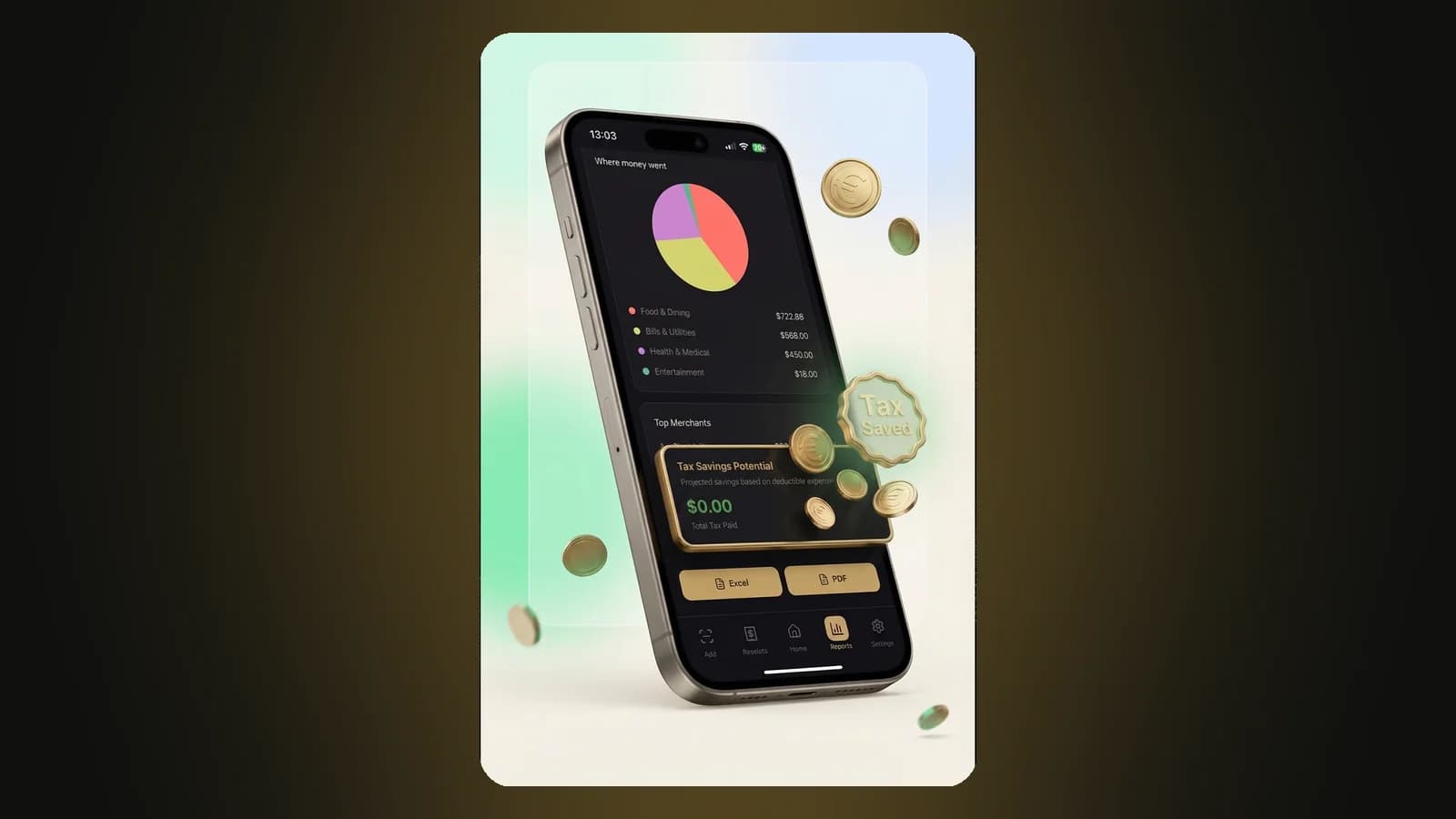
Expio's Tax center is built around these rules: it maps business expenses to Schedule C lines, applies the 50% limit to meals, points out receipts over $75 that have no image attached, and lists what still needs a business purpose or a category.
How long to keep records
In the US, the general rule is to keep records until the period of limitations for that return runs out: usually three years from the date you filed, or two years from when you paid the tax, whichever is later. Longer periods apply in some cases — for example six years if income was substantially underreported, and seven years for certain bad-debt or worthless-securities deductions.
Other countries have their own retention periods, and they are often longer — in many places between five and ten years. Check your local tax authority's guidance. The practical conclusion is the same everywhere: keep the images somewhere they won't fade or get lost.
Outside the US: VAT and sales tax
If you are VAT-registered, the tax on a purchase may be reclaimable — but usually only with a proper VAT invoice or receipt showing the tax. For VAT countries, Expio's Tax center breaks down the tax you paid by rate and shows the deductible share, which makes preparing a return or talking to your accountant much faster.
Reimbursements are records too
If an employer or client pays you back, track the status. In Expio you can mark an expense as to be reimbursed, claim sent or reimbursed, so nothing is claimed twice and nothing is forgotten.
Handing it to your accountant
The best gift you can give an accountant is a clean package: a summary, a list of transactions and the receipts behind them. With Expio Pro you can download an accountant package — a single ZIP file containing a Schedule C summary, a transactions CSV and the receipt images — or export PDF and Excel reports on any plan.
A year-round checklist
- Scan receipts the day you get them
- Mark business vs. personal and add a purpose
- Keep receipt images attached to their expenses
- Review categories monthly
- Export and share with your accountant before the deadline, not on it
Good records don't reduce your tax on their own. They make sure you can claim what you are entitled to — and defend it if anyone asks.
Sources
- IRS Publication 463, Travel, Gift, and Car Expenses — irs.gov/publications/p463
- IRS Publication 583, Starting a Business and Keeping Records — irs.gov/publications/p583
- IRS: How long should I keep records? — irs.gov/businesses/small-businesses-self-employed/how-long-should-i-keep-records
- IRS Revenue Procedure 97-22 (electronic storage of records)